

급식체 단어들
Geupsikche (Korean Youth Slang) Terms Geupsikche DaneodeulMeme Name: Geupsikche Words (급식체 단어들) Pronunciation: "GUP-shik-che DAHN-uh-dool." The "GUP" sounds like the beginning of "cup," "shik" like "sick," "che" like "check," "DAHN" like "dawn," "uh" like "uh-oh," and "dool" like "pool."
Original
Period of Popularity
The term 'Geupsikche' (급식체) refers to a writing style that was actively popular from approximately 2015 to 2019. It became a particularly hot topic in 2017. Of course, the use of slang by teenagers began in the early days of PC communication around 1993-1994, and Geupsikche can be seen as part of this ongoing trend of linguistic evolution.
Meaning
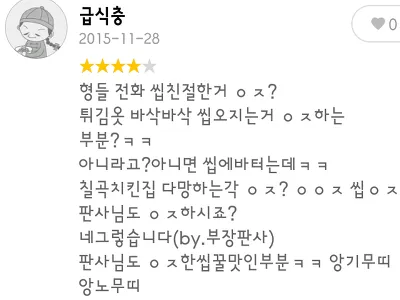
Geupsikche primarily refers to a writing style used by students, often pejoratively called 'Geupsikchung' (급식충, literally "school lunch bug/worm"). Figures like internet broadcaster Chulgu (철구) played a significant role in popularizing it. It tends to combine popular slang from existing internet communities and other online broadcasts. Its characteristics include excessive omission of spacing, disregard for standard spelling and grammar, and a prominent use of initial consonant abbreviations (초성체), shortened words, and neologisms. Some modified Japanese expressions are also occasionally incorporated.
Target Audience
Geupsikche is primarily used by elementary, middle, and high school students. However, some university students who grew up using Geupsikche also continue to use it. Beyond this, it is widely used online, especially in online communities like DC Inside and among people who play online games. Adults, including streamers, sometimes use it as a meme or for specific conceptual purposes. Its usage tends to decrease among high school students, particularly in higher grades. According to a 2018 survey, approximately 71.8% of elementary, middle, and high school students use Geupsikche, with 52.4% reporting frequent use.
Usage Examples
- ㅇㅈ? ㅇ ㅇㅈ: A shortened form of "인정? 어 인정" (Injeong? Eo Injeong), meaning "Agree? Oh, agree." Used to express agreement or acknowledge a situation.
- 앙 기모띠: A modified expression of the Japanese word 'kimochi' (気持ち, meaning "good feeling"), used when one feels good.
- ㅆㅅㅌㅊ: A shortened form of "씹상타치" (Sipsangtachi), used to describe a person or object with exceptionally good skill or quality.
- 에바다: Means "that's too much" or "unbelievable." Used when a situation is excessive or difficult to accept.
- 안물, 안궁: A shortened form of "안 물어봤다, 안 궁금하다" (An mul-eobwatda, An gunggeumhada), meaning "Didn't ask, not curious." Used to express disinterest in what someone is saying.
- ㅋㅋ루삥뽕: An onomatopoeic expression with no specific meaning, used to express laughter or lighten the mood in a conversation.
- ㄱㅇㄷ: A shortened form of "개이득" (Gae-ideuk), meaning "big gain" or "jackpot." Used when one receives a significant benefit.
- ㅇㄱㄹㅇ ㅂㅂㅂㄱ: A shortened form of "이거레알 반박불가" (Igeoreal Banbakbulga), meaning "This is real, undeniable." Used to assert that a fact is true and cannot be refuted.
- ~각: Signifies "a high probability of ~" or "should ~." For example, "ㅇㅈㄱ (인정각)" (Injeong-gak) means "should acknowledge."
Usage Precautions
Geupsikche often disregards spacing, spelling, and grammar, which can lead to communication difficulties with older generations and may be perceived as a "destruction of Hangeul." Furthermore, it can include disrespectful or derogatory expressions such as 'Eung Niaemi' (응 니애미, "yeah your mom") or 'Neugeom' (느검, a shortened, vulgar form of "your mom"), requiring extreme caution in its use. Overall, excessive use of Geupsikche can create a negative impression of immaturity or childishness. It is also important to note that it can create a linguistic barrier between generations.
No comments yet.
Want more features?
Install the KMeme app and enjoy quizzes, meme likes, comments and more!